iOS Developer Remote Jobs: 7 Secrets to Unlock Lucrative Roles

Summary:
iOS developer remote jobs offer unmatched freedom and earning power for skilled programmers. This guide reveals battle-tested methods to land high-paying positions with global tech companies, helping you build apps from anywhere while earning six figures.

Key Takeaways:
- iOS developer remote jobs provide flexible work-from-home opportunities with competitive six-figure salaries averaging $95,000-$150,000 annually.
- Master Swift, SwiftUI, and Xcode alongside strong communication skills to stand out in the competitive remote iOS developer jobs marketplace.
- Top remote iOS engineer jobs exist across fintech, healthcare, e-commerce, and enterprise software companies worldwide.
- Build a GitHub portfolio showcasing native applications and open-source contributions to prove your remote ios jobs expertise.
- Prepare for rigorous technical assessments and behavioral interviews that evaluate both coding abilities and cultural fit.
- Negotiate contracts by researching geographic salary differences and understanding your market value as a Junior / Sr. iOS Developer.
Introduction:
Navigating the Global Landscape of Remote iOS Development
iOS developer remote jobs are absolutely game changing. You’re probably here because you also want that freedom. Maybe you’re tired of office politics. Perhaps you dream of traveling while coding. Or you just want to work in your pajamas (no judgment – I do it too).
This guide gives you everything you need to learn exactly how to find remote ios developer positions, what skills companies actually want, and how to nail interviews.
The Allure of Remote iOS Developer Jobs
The remote iOS developer jobs market exploded after 2020. Companies realized developers could ship quality apps from ANYWHERE 🌏 Why limit your talent pool to one city when you can hire the best Swift engineer in Mumbai, Manila, or Madrid?
Here’s what makes ios developer remote jobs so attractive. First, the money is excellent. According to Glassdoor data, remote jobs for developers in iOS pay between $104,000 and $167,000 yearly, depending on experience. Second, you control your schedule. Need to pick up kids at 3 PM? Do it. Want to code at midnight when you’re most focused? Go ahead.
Third, you escape office distractions. No more tap-on-the-shoulder interruptions or pointless meetings. You get deep focus time to solve complex problems in Xcode.
But here’s the reality check: remote iOS dev jobs are competitive. Companies get hundreds of applications. You need more than technical chops. You need strategy.
What This Ultimate Guide Offers
We’ll cover building your technical foundation in Swift and iOS frameworks, how to craft applications that get interviews, tackling the interview process, including live coding challenges that trip up most candidates. And also we’ll address the big question: Will AI take these jobs? (Spoiler: Not anytime soon.)
Building Your Foundation:
Essential Skills for a Global Remote iOS Developer
Mastering Core iOS Development Technologies
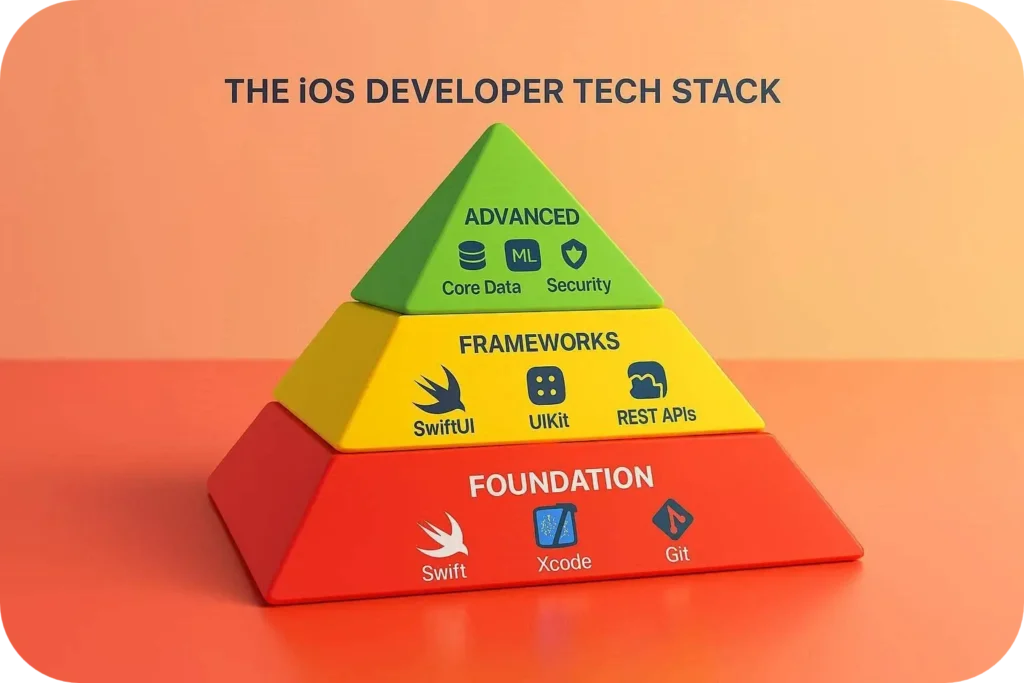
Swift is your bread and butter. If you’re still writing Objective-C (even though it is also important), you maybe behind. Companies want developers who know Swift 5.9+ inside out. This means understanding optionals, closures, protocols, and generics. Not just using them – truly understanding them.
SwiftUI has become the standard for interface design. Yes, some companies still use UIKit, but SwiftUI knowledge is non-negotiable for modern remote ios developer jobs worldwide. Build apps that adapt across iPhone, iPad, and MacOS. Master state management with @State, @Binding, and @ObservedObject.
Xcode proficiency separates amateurs from professionals. Learn keyboard shortcuts. Understand build configurations. Know how to profile performance issues. Companies expect you to ship bug-free code without constant hand-holding.
Let’s talk about API integration. Every iOS Mobile Application Developer works with backend services. You need solid understanding of REST APIs, JSON parsing, and async networking with URLSession or Alamofire. Know how to handle error states gracefully.
Git version control is mandatory. Learn branching strategies, pull requests, and how to resolve merge conflicts. This shows you can work on team collaboration projects.
Cultivating the Remote-First Professional Skillset
Technical skills get you in the door, but soft skills keep you employed. Remote work demands exceptional communication. You can’t walk to someone’s desk for clarification. Every question becomes a Slack message or video call.
Write clearly. For example, “Made progress” tells nothing, instead say “Implemented the authentication flow, fixed three bugs in the checkout screen, blocked on API documentation” gives more context.
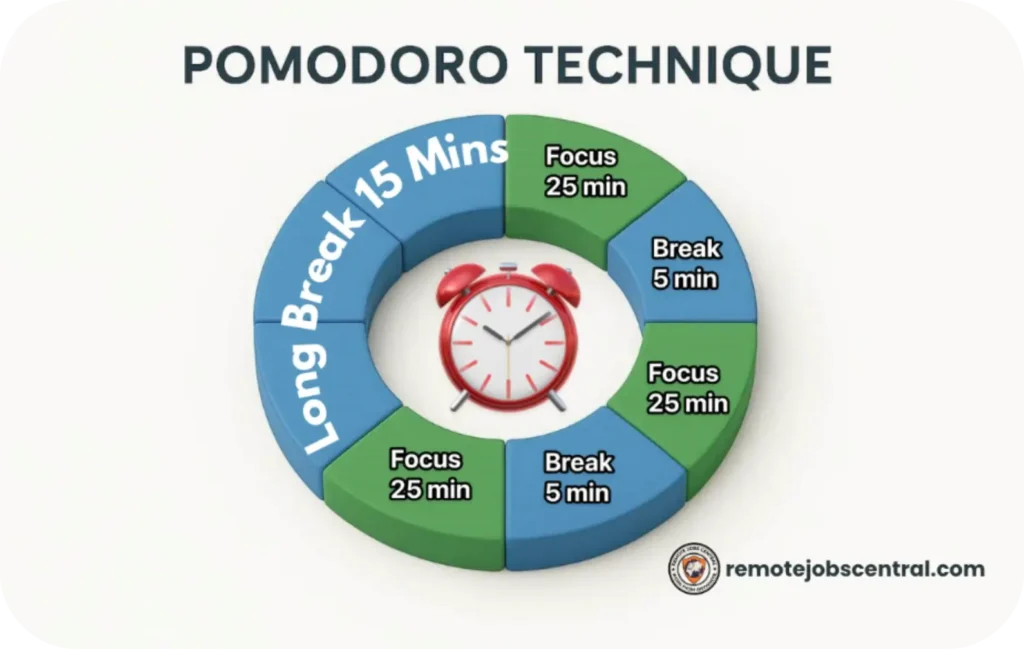
Time management becomes critical in remote work policies. No boss watches over your shoulder. You must self-motivate. It is recommended to use the Pomodoro technique: 25 minutes of focused coding, then a 5-minute break. It keeps you productive without burning out.
Embrace asynchronous communication. Remote workers often span multiple time zones. You can’t expect instant responses. Document your work thoroughly. Record video walk-throughs of complex features. Future you – and your teammates – will thank you.
Proactive problem-solving wins respect. When you hit a roadblock, spend 30 minutes trying to solve it yourself. Search documentation, check Stack Overflow, experiment. Then reach out with “Here’s what I tried, here’s what failed, here’s what I think the issue might be.” This approach shows initiative.
Setting Up Your Optimal Remote Workspace

Your home office setup impacts your productivity and interview success. Invest in a good desk and ergonomic chair. You’re sitting there 8+ hours daily. Back pain kills productivity. Position your monitor at eye level to avoid neck strain.
Internet connectivity matters immensely. Get the fastest connection available. Consider a backup mobile hot spot for emergencies. Nothing embarrasses you faster than dropping offline during a crucial final stage of interview or a pair programming session.
Your video setup makes first impressions. Use a external webcam if your laptop camera is grainy. Light your face well – a ring light costs $30 and makes you look professional. Choose a clean, neutral background. A bookshelf works great; a messy bedroom doesn’t.
Noise-canceling headphones save your sanity. They help you focus when family members are home and ensure clear audio on calls.
Understanding the Global Remote iOS Job Market:
The remote job market for iOS Engineer roles has unique characteristics. Understanding these helps you target the right opportunities.
Differentiating Remote iOS Roles and Seniority Levels
Remote junior ios developer jobs focus on implementing features under supervision. You’ll work on well-defined tasks like building UI screens or fixing bugs. Companies expect you to know Swift basics and common iOS frameworks. Salary range: ~$60,000-$85,000.
Mid-level iOS developer remote jobs require 3-5 years experience. You’ll design features independently, review code, and mentor juniors. You need deep knowledge of app architecture patterns like MVVM or VIPER. You should understand performance optimization and memory management. Salary range: ~$90,000-$130,000.
Sr. iOS Developer positions demand 5+ years and leadership abilities. You’ll make architectural decisions, interview candidates, and guide technical direction. Companies want someone who’s shipped multiple apps to the Apple App Store. You need expertise in testing frameworks, CI/CD pipelines, and code review practices. Salary range: ~$130,000-$180,000.
iOS Engineer versus iOS Mobile Application Developer—is there a difference? Not really. Companies use these titles interchangeably. Focus on the job description, not the title. Some “engineer” roles are junior; some “developer” roles are senior.
Swift Developer and iOS Native Developer roles emphasize platform-specific knowledge. These aren’t hybrid positions where you also build Android apps. Companies want specialists who know Apple’s ecosystem deeply – from SwiftUI to Core Data to push notifications.
Top Industries and Company Types Hiring Remote iOS Talent
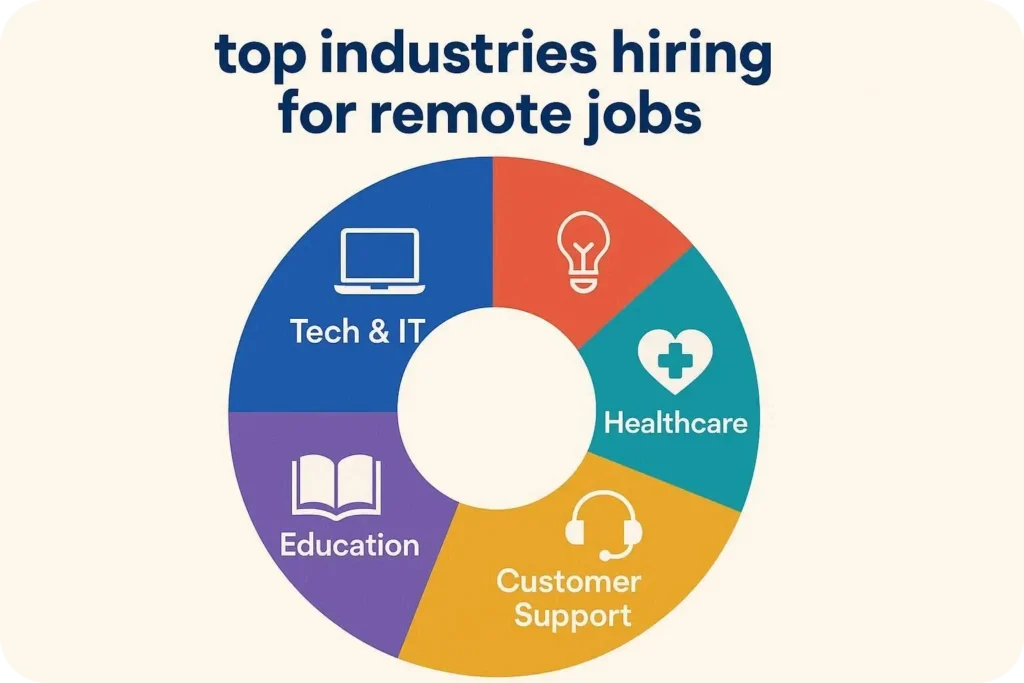
Fintech companies lead in hiring remote iOS developer talent. Think payment apps, banking platforms, cryptocurrency exchanges. They pay top dollar because security and user experience are critical.
E-commerce platforms need skilled Swift iOS Engineer professionals. Building smooth shopping experiences, payment integration, and order tracking requires serious iOS chops.
Healthcare technology companies seek remote iOS specialists. Telemedicine apps, health tracking platforms, and medical records systems must meet strict regulatory requirements. This creates stable, well-paying positions.
Enterprise applications targeting businesses need MacOS Developer skills too. Many companies build productivity tools that work across iPhone, iPad, and Mac. Universal app development opens more opportunities.
Startups offer exciting growth opportunities for Freelance iOS Developer Jobs. You’ll wear multiple hats and influence product direction. The pay might start lower, but equity compensation can be valuable. Plus, you’ll learn fast.
Don’t overlook digital media companies. Streaming services, news apps, and content platforms also definitively need strong iOS teams. The work is engaging and often involves cutting-edge features.
Navigating Global Hiring Practices and Legalities

Remote iOS developer jobs worldwide come with legal complexities. Companies can’t always hire anyone, anywhere directly. Some use Employer of Record services that handle local employment laws.
Contract work versus full-time employment makes a big difference. Freelance positions offer flexibility but no benefits. You handle your own taxes and insurance. Full-time roles provide stability, health coverage, and paid time off.
Time zone expectations vary. Some companies want overlap with their core team hours. A San Francisco startup might require you to work Pacific Time afternoon hours. Others embrace fully asynchronous work. Clarify this before accepting offers.
Payment methods matter for international roles. Do they pay in your local currency? What’s the exchange rate policy? Negotiate payment in a stable currency if possible. Tax implications also get complicated fast. You might owe taxes in multiple jurisdictions. Consult a tax professional familiar with remote work. It’s worth the investment to avoid nasty surprises.
Strategic Job Search:
Finding Global Remote iOS Opportunities
Finding remote iOS developer jobs requires strategy. Don’t just spray applications everywhere. Target your search.
Proactive Approach to Uncover Hidden Gems
We may be biased but signing up for FREE Remote Jobs Central Newsletter can be your BEST CHOICE (where we send you curated worldwide remote iOS Developer jobs). Of course, you don’t have to take our word for granted – Please see our reviews.
Mastering Other Networks
LinkedIn remains a powerful networking tool. Stack Overflow Jobs attracts technical companies. Your Stack Overflow reputation matters here. If you’ve answered iOS questions and earned badges, mention it in applications.
Twitter (X) has an active iOS dev community. Follow companies you’d love to join. Many announce remote ios developer jobs on social media before job boards. Engage authentically, not desperately.
The best remote iOS developer jobs almost never get posted publicly. Companies usually hire through referrals and direct outreach.
Cold email works better than you think. Find companies you admire. Check their app on the App Store. Identify something you could improve. Email their engineering lead: “Hey, I noticed your app’s onboarding could be smoother. I’d love to chat about how I could help.” Include a prototype if possible. Offering upfront value & demonstrating how you can solve problems goes a long way.
Attend virtual iOS conferences. WWDC and Swift Heroes all have networking events. Join breakout rooms, ask questions, follow up afterward. Contribute to open source projects these companies maintain. It demonstrates your code quality and culture fit. After a few merged pull requests, you’re no longer a stranger. You’re a contributor they respect.
Crafting a Compelling Application for Global Remote Roles:
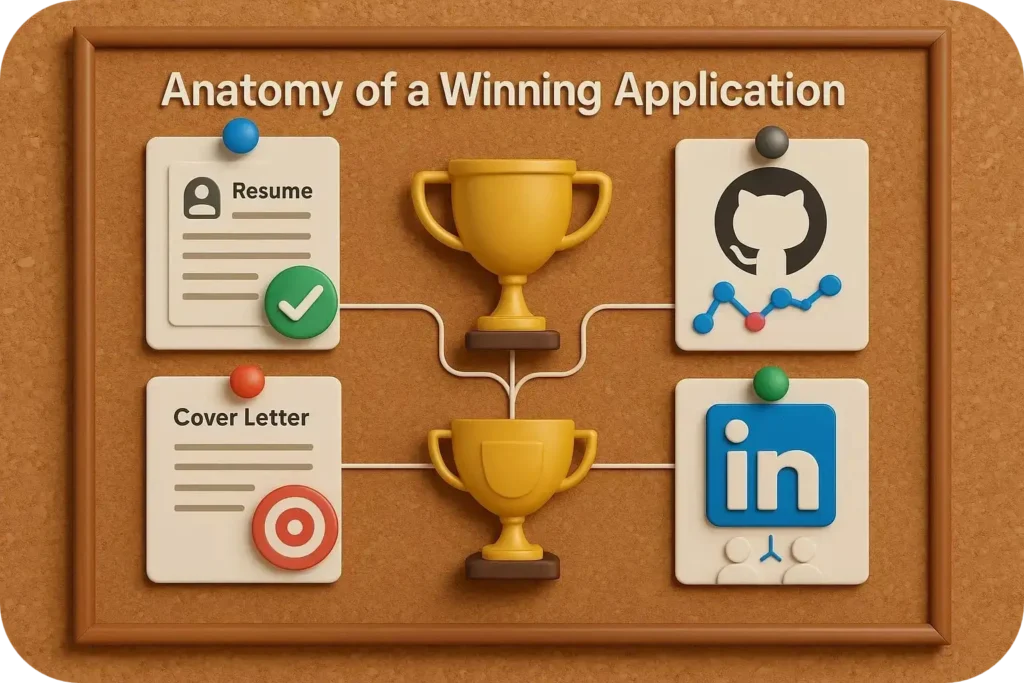
Your application is your first impression. Make it count.
Optimizing Your Resume for Remote iOS Development
Start with a strong summary that includes remote iOS developer jobs experience. “Senior iOS Developer with 6 years building native applications for remote-first startups” immediately signals your fit.
Highlight remote work experience prominently. If you’ve worked remotely before, say so. Companies want proof you can handle the autonomy and communication challenges.
List technical skills in a scannable format. Group them: Languages (Swift, Objective-C), Frameworks (SwiftUI, UIKit, Combine), Tools (Xcode, Git, JIRA). Don’t list every technology you’ve touched. Focus on depth over breadth.
Quantify your achievements. “Built feature that increased user engagement” is weak. “Implemented push notification system that boosted 30-day retention by 23%” is strong. Numbers prove impact.
Include your GitHub profile link prominently. Recruiters will check it. If your GitHub is empty or outdated, fix that before applying.
Aim for a single page, but keep it to two pages maximum. Remote hiring managers review dozens of applications daily. Respect their time. Every line should serve a purpose.
Building an Impressive Remote Portfolio
Your portfolio demonstrates what resumes can’t: actual code quality and product thinking. Create a dedicated website showcasing 3-5 strong projects.
Include at least one app on the App Store. It doesn’t need thousands of downloads. What matters is clean code, good UX, and you can talk about design decisions. Open-source the code so reviewers can see your work.
Showcase diverse skills. One app might feature Core Data for local storage. Another demonstrates API integration with a RESTful backend. A third shows your SwiftUI mastery with complex animations.
Write case studies for each project. Explain the problem you solved, your technical approach, challenges you faced, and results achieved. This reveals your thinking process.
Make sure your portfolio itself is well-designed. If you’re a Swift Developer who can’t create a decent personal website, that’s a red flag. It doesn’t need to be fancy – clean and functional works.
Writing Impactful Cover Letters
Most cover letters are generic trash. “I’m very interested in this position because I’m passionate about iOS development.” Delete that.
Start with something specific to the company. “I’ve been using [their app] for two years, and I noticed the recent redesign significantly improved the checkout flow.” This shows you’ve done research.
Address the role requirements directly. If they want CI/CD experience, mention the deployment pipeline you built. If they need API integration skills, describe the complex third-party services you’ve connected.
Tell a brief story that demonstrates remote work success. “At my last remote role, I coordinated with a team across six time zones to ship a major feature update in three months.” Stories stick; generic claims don’t.
End with a clear call to action. “I’d love to discuss how my experience building fintech apps could help you achieve your Q2 roadmap goals.” Be confident, not desperate.
Keep it under 300 words. Hiring managers skim cover letters. Make every sentence count.
Leveraging LinkedIn for Global Visibility
Your LinkedIn headline matters enormously. Don’t waste it on “iOS Developer at Company X.” Try “Senior iOS Developer | Swift & SwiftUI Expert | Building Exceptional Mobile Experiences.” Keywords help recruiters find you.
Your About section should read like a conversation, not a resume. Share why you love iOS development. Mention specific technologies you enjoy. Include keywords naturally: remote work, iOS frameworks, Agile methodology.
Get recommendations from colleagues and managers. Request specific testimonials as personalized recommendations carry weight.
Post regularly about iOS development. Share insights from your work (without revealing proprietary info). Comment on Apple announcements. Engage with other developers’ content. Activity signals you’re current and engaged.
Skills endorsements matter less than you think, but still get key ones validated: Swift, iOS Development, Git version control, Xcode. Ask close colleagues to endorse your top skills.
Mastering the Remote iOS Interview Process:
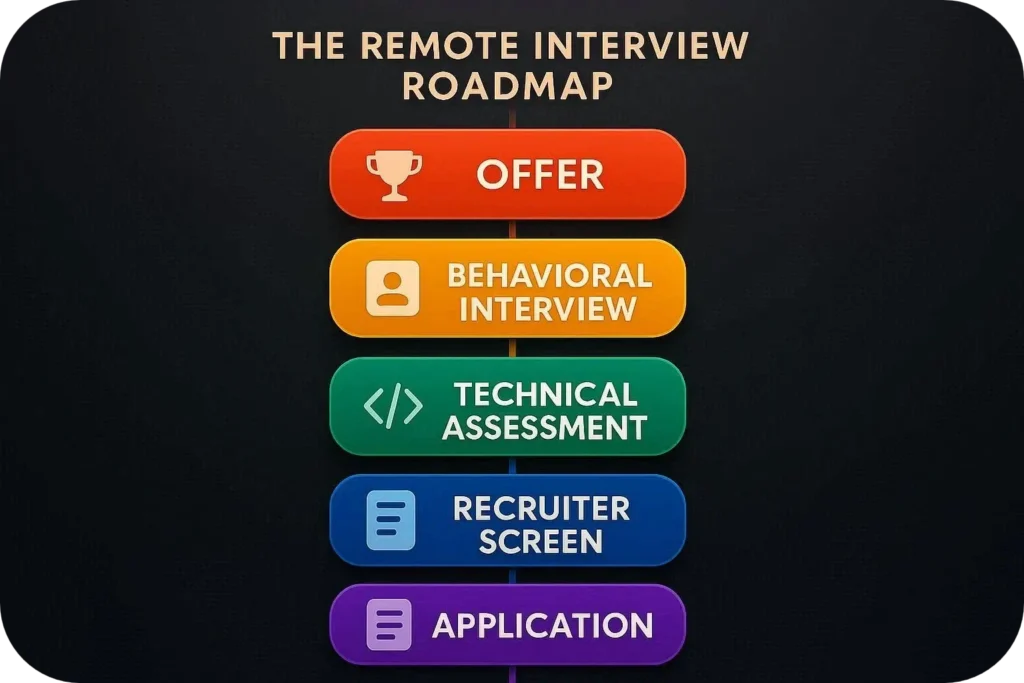
You just got the interview, AWESOME! Now comes the hard part. Remote interviews have unique challenges.
Preparing for Technical Assessments
Technical screens usually start with a coding challenge. You’ll get a problem to solve in 30-60 minutes.
Study data structures and algorithms fundamentals. Yes, you might never implement a binary tree at work. But companies test these basics to gauge problem-solving ability. Know arrays, dictionaries, recursion, and common sorting algorithms.
Expect questions about Swift language features. Explain optionals, protocol-oriented programming, value vs reference types. Be ready to discuss when you’d use struct versus class.
Live coding sessions are nerve-wracking. You’ll share your screen and code while someone watches. Practice this! Have a friend observe while you solve problems. Get comfortable thinking out loud.
System design questions come in senior Sr. iOS Developer interviews. “Design Instagram’s photo upload feature.” Discuss architecture patterns, data flow, networking, caching, error handling. Draw diagrams. Ask clarifying questions.
Technical take-home projects are common. You might get 3-7 days to build a small app. Treat it like a real project. Write clean code, add unit tests, include a README explaining your decisions. This is your chance to showcase craftsmanship.
Don’t forget to study the company’s app beforehand. Download it, use it extensively, note what you like and what could improve. Interviewers often ask for feedback.
Excelling in Behavioral and Culture Fit Interviews
Behavioral questions assess how you work on teams. Use the STAR method: Situation, Task, Action, Result. “Tell me about a time you disagreed with a teammate” needs a concrete story, not vague platitudes.
Prepare examples of team collaboration successes. Remote companies care deeply about communication skills. Share stories about coordinating across time zones, resolving misunderstandings over chat, or explaining complex technical concepts to non-technical stakeholders.
Discuss your remote work experience honestly. If you’re new to remote work, acknowledge it but emphasize your plan: “I’ve set up a dedicated workspace, established a daily routine, and I’m excited to use tools like Slack and Zoom to stay connected.“
Ask insightful questions. This isn’t just their chance to evaluate you – it’s your chance to evaluate them too. Ask about potential on-call rotations, deployment frequency, code review processes, professional development budget. Good questions demonstrate experience.
Cultural fit matters more remotely because you can’t rely on office proximity to build relationships. Show you’re self-motivated, communicative, and collaborative. Share examples of going above expectations or helping teammates succeed.
Be authentic. Don’t pretend to be someone you’re not. If you prefer asynchronous communication, say so. If you’re an early bird who codes best at 6 AM, mention it. The right company will appreciate your honesty.
Optimizing Your Remote Interview Environment
Technical setup can make or break your interview. Test everything 30 minutes before. Join the video call early.
Lighting matters tremendously. Face a window or use artificial lighting that illuminates your face evenly. Avoid backlighting that makes you a dark silhouette.
Camera positioning affects perception. Position your webcam at eye level. Looking down at a laptop makes you appear less engaged. Use a laptop stand or external monitor.
Sound quality matters more than video. Use headphones with a good microphone. AirPods work fine. Anything is better than laptop speakers that create echo.
Close all unnecessary applications. Nothing kills professionalism faster than Slack notifications popping up mid-interview. Put your phone on Do Not Disturb.
Have a glass of water nearby. Talking for 60+ minutes dries your throat. Taking a quick sip also gives you a moment to think.
Your background should be clean and professional. Blurred backgrounds work if your real background is messy. But actual clean spaces always look better.
Securing Your Role:
Negotiation, Onboarding, and Long-Term Success
You aced the interviews, NICE! Now comes negotiation and starting strong.
Strategic Salary Negotiation for Global Roles
Never give your salary expectation first. When asked, deflect politely: “I’m focusing on finding the right fit. What’s the budgeted range for this role?” Make them show their cards.
Research salary benchmarks thoroughly. Sites like Glassdoor, and PayScale show what companies pay for remote iOS developer jobs. Geographic differences exist – San Francisco companies pay more than ones based in lower-cost cities, because the cost of living is also very high.
Remember that remote work changes the equation. Companies save on office space. You save on commuting. Some companies pay based on your location; others pay role-based rates. Know which model they use.
Negotiate total compensation, not just base salary. Consider equity, signing bonuses, annual bonuses, professional development budgets, home office stipends, health insurance quality, and paid time off. Sometimes a lower base with better benefits wins.
Wait for a written offer before negotiating. Verbal offers aren’t real. Once you have it in writing, take 2-3 days to review and come back with your ask.
Frame negotiations positively. Not “I need $140k or I’m walking away.” Instead, “Based on my experience shipping five production apps and my expertise in Swift iOS Engineer work, I believe $140k base reflects market value for this role. Here’s my research…“
Be willing to walk away. If they won’t meet your minimum or the role isn’t right, declining is okay. Desperation leads to bad decisions.
Smooth Remote Onboarding and Integration
Your first month sets the tone for your entire tenure. Take onboarding seriously.
Over-communicate early. Send daily updates to your manager: what you accomplished, what you’re working on, where you’re blocked. This builds trust when they can’t see you working.
Set up one-on-ones with team members. Go beyond your immediate team – talk to product managers, designers, QA engineers. Understanding the full product development process helps you contribute effectively.
Ask lots of questions. “Dumb” questions don’t exist during onboarding. Better to clarify now than make incorrect assumptions. Use video calls for complex questions; text for simple ones.
Document everything you learn. The knowledge you wish existed probably doesn’t. Create it. Future team members will thank you.
Deliver something tangible quickly. Even a small bug fix or documentation improvement shows you’re productive. Quick wins build confidence – yours and your manager’s.
Learn the communication norms. Does your team prefer Slack or email? Are afternoon meetings taboo? Do people use video during standups? Adapt to their culture.
Thriving as a Global Remote iOS Developer
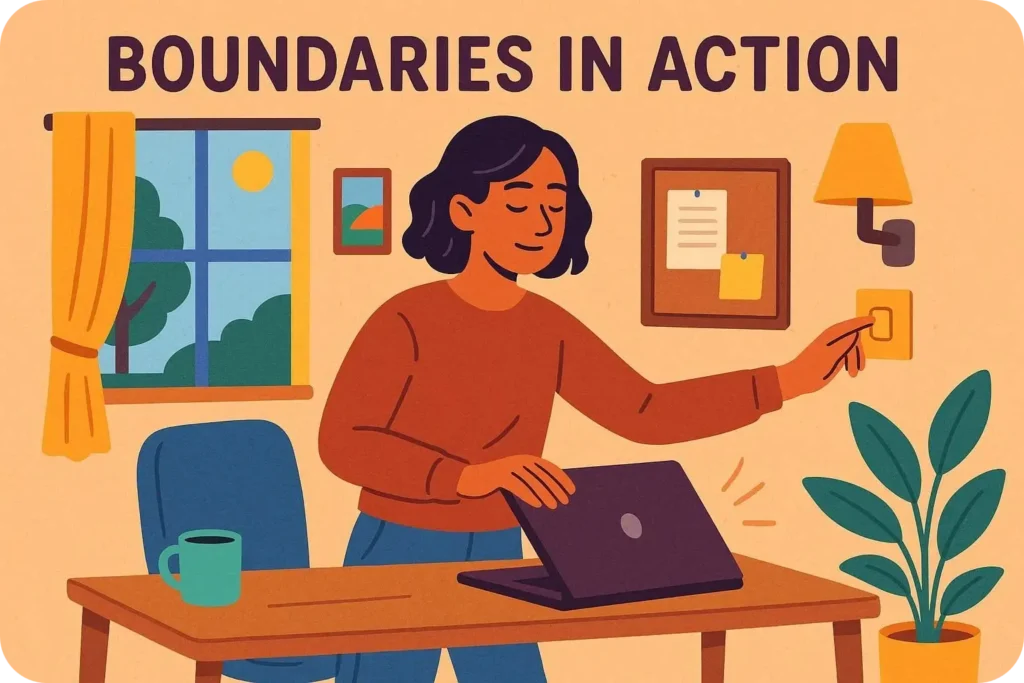
Maintain boundaries between work and life. When your bedroom is your office, separating the two gets hard. Protecting personal time prevents burnout.
Build genuine relationships with teammates. Schedule virtual coffee chats. Play online games during Friday socials. Celebrate teammates’ wins. Remote work can feel isolating sometimes, fight that actively.
Stay visible without being annoying. Share accomplishments in team channels. Contribute to discussions. Help colleagues when they’re stuck. Being remote means “out of sight” but that shouldn’t become “out of mind.”
Keep learning. Technology changes rapidly. New iOS frameworks and tools emerge constantly. Dedicate 5-10 hours weekly to professional growth. Take courses, read documentation, experiment with beta features.
Network continuously. Just because you’re employed doesn’t mean you stop building relationships. Attend conferences, participate in online communities, maintain your GitHub presence. Your next opportunity often comes from connections made during previous roles.
The Future-Proof Remote iOS Developer:
Emerging Trends and Continuous Growth
The iOS ecosystem never stops changing. Staying relevant requires adaptability.
Exploring Emerging Technologies in iOS
Machine Learning integration through Core ML is becoming standard. Apps that recommend content, recognize images, or predict user behavior need ML expertise. You don’t need a PhD, but understanding model integration and on-device inference gives you an edge.
Augmented Reality via ARKit opens exciting opportunities. Furniture shopping apps, gaming experiences, educational tools – AR transforms how users interact with devices. If you enjoy 3D programming and computer vision, this path offers tons of growth opportunities.
SwiftUI continues maturing. Each iOS release adds capabilities. Master declarative UI programming. Companies increasingly prefer SwiftUI for new projects because development speed and code clarity matter.
Cloud integration with services like Firebase, AWS Amplify, or custom backends is non-negotiable. Understanding how mobile apps interact with cloud-based systems makes you more valuable. Learn authentication flows, real-time databases, and push notifications.
Large Language Models are entering mobile apps. Integrating AI capabilities directly into iOS applications will become common. Understanding prompt engineering and API integration with services like OpenAI positions you well.
Wearable development for Apple Watch creates niche opportunities. Health apps, fitness tracking, and productivity tools for wrists require specialized knowledge. It’s a less crowded field than iPhone development.
Embracing Security and Reliability
Cybersecurity awareness separates good developers from great ones. Apps handle sensitive user data. Understanding encryption, secure storage via Keychain, certificate pinning, and OWASP mobile security principles protects users and your reputation.
Automated testing isn’t optional anymore. Write unit tests for business logic, UI tests for critical flows, and integration tests for API interactions. Companies expect test coverage above 60%. Testing frameworks like XCTest and tools for continuous integration ensure quality.
Performance optimization skills matter immensely. Apps that drain batteries or hog memory get deleted. Learn Instruments profiling, memory leak detection, and async programming with Combine or async/await. Smooth 60fps animations aren’t magic – they’re engineering.
Error handling and crash reporting distinguish professional developers. Integrate tools like Firebase Crashlytics or Sentry. Monitor app health proactively. Fix crashes before users report them.
Accessibility makes apps usable for everyone. VoiceOver support, dynamic type, color contrast – these aren’t nice-to-haves. They’re requirements. Plus, accessible apps often rank better in the App Store.
Lifelong Learning and Community Engagement
Join iOS developer communities. The connections you make and knowledge you gain are priceless.
Contribute to open source. Whether it’s submitting bug fixes to popular libraries or maintaining your own packages, open source work builds reputation and skills simultaneously.
Mentor junior developers. Teaching forces you to understand concepts deeply. Plus, giving back to the community that helped you feels amazing.
Follow iOS thought leaders on social media. Subscribe to relevant iOS newsletters to stay current.
Experiment with personal projects. Try technologies you don’t use at work. Build that weird app idea you’ve had. Side projects keep passion alive and sometimes turn into freelance gig opportunities.
Conclusion:
Your Global Remote iOS Journey Starts Now
You now have everything needed to land iOS developer remote jobs. You understand the technical skills companies want. You know where to find opportunities and how to stand out. You’ve learned interview strategies and negotiation tactics.
But knowledge without action is worthless. The remote iOS developer jobs market is booming. Companies need talented developers who can ship quality apps. That could be you. Whether you’re seeking your first remote junior ios developer jobs or hunting for Sr. iOS Developer roles, opportunities exist.
Your dream job—working from anywhere, building amazing apps, earning great money is achievable. It won’t happen overnight. But with focused effort, it will happen eventually.
Ready to take the next step? Want exclusive access to the best remote job listings, including opportunities with many super cool companies that you may have never heard of (but YOU SHOULD)?Then, Sign up to our FREE Remote Jobs Central newsletter to get the latest remote job listings directly in your inbox and also Subscribe to our YouTube channel for awesome videos with research backed insights and expert tips.
What’s the biggest challenge you face in your remote iOS job search? Have you ever applied for one online? Share your experience in the comments below – let’s build a community of remote iOS professionals and support each other.
FAQ:
What is the salary for remote iOS developer?
Remote iOS developer salaries vary based on experience and location but typically range from $60,000 to $180,000 annually. Junior developers earn $60,000-$85,000, mid-level developers make $90,000-$130,000, and senior developers command $130,000-$180,000. Geographic differences exist – developers in high-cost areas or working for venture-backed startups often earn more. Contract and freelance rates typically range from $75-$200 per hour depending on specialization and reputation.
Are iOS developers still in demand?
Yes, iOS developers remain highly in demand despite market fluctuations. Apple’s ecosystem continues growing with over 2 billion active devices worldwide. Companies across fintech, healthcare, e-commerce, and enterprise software actively hire iOS talent. The demand for skilled Swift developers who understand modern frameworks like SwiftUI and can build native applications exceeds supply, particularly for senior positions.
Will AI replace iOS developers?
AI will not replace iOS developers but will change how they work. AI tools help with code completion and boilerplate generation, making developers more productive. However, iOS development requires understanding user experience, architectural decisions, debugging complex systems, and business context – those skills AI cannot replicate. The demand for developers who can use AI tools to work faster is increasing, not decreasing.
What is the easiest WFH job to get hired at?
The “easiest” work-from-home job depends on your existing skills, but entry-level positions in customer service, data entry, and content writing typically have lower barriers to entry than technical roles. For developers specifically, quality assurance testing or technical support roles are often easier to secure than engineering positions. However, “easy to get” usually correlates with lower pay and fewer growth opportunities compared to skilled positions like iOS developer remote jobs that require technical expertise.